ОБ ЭЛЕКТРОСТАТИЧЕСКОМ ВЗАИМОДЕЙСТВИИ ДИЭЛЕКТРИЧЕСКИХ ЧАСТИЦ СФЕРОИДАЛЬНОЙ ФОРМЫ В РАСТВОРЕ ЭЛЕКТРОЛИТА
С. И. Гращенков
Полный текст (PDF), 114 просмотров
Аннотация:
Рассматривается электростатическое взаимодействие двух идентичных …
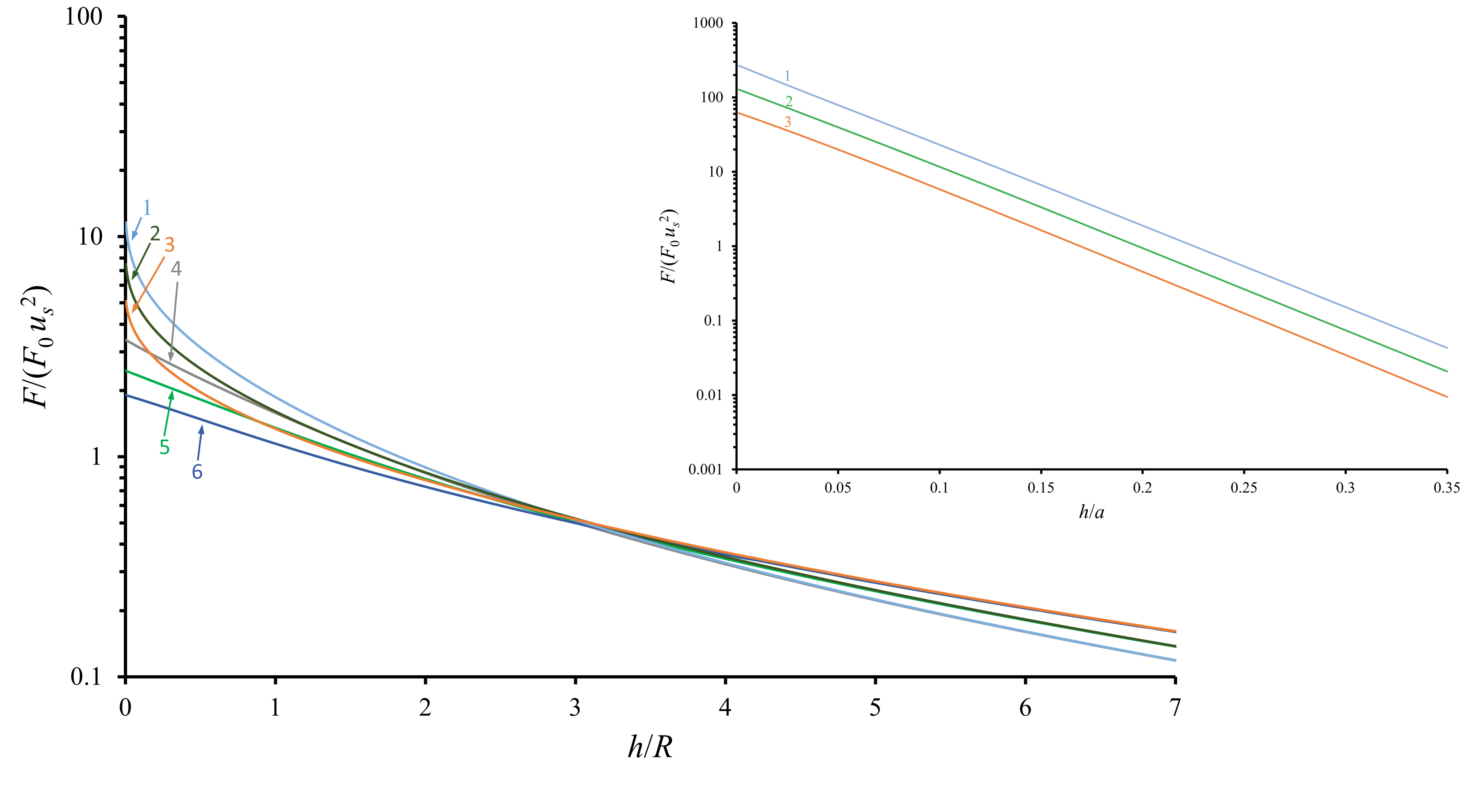
Рассматривается электростатическое взаимодействие двух идентичных заряженных диэлектрических частиц сфероидальной формы в растворе симметричного электролита. Исходя из уравнения Пуассона–Больцмана с помощью метода конечных элементов проводятся расчеты сил, с которыми частицы отталкиваются друг от друга при условии, что распределения заряда на их поверхностях не меняются с изменением расстояния между ними, а внешнее электростатическое поле отсутствует. Полагается, что распределение заряда на поверхности каждой частицы совпадает с распределением одиночной частицы при заданном значении потенциала на ее поверхности. Показано, что в зависимости от постоянной Дебая и расстояния между поверхностями частиц увеличение продольного размера частиц при переходе от сплюснутых сфероидов к вытянутым может как увеличивать, так и уменьшать силу взаимодействия между ними.
ВЛИЯНИЕ БИС(2-ЭТИЛГЕКСИЛ)СУЛЬФОСУКЦИНАТА НАТРИЯ НА СОРБЦИЮ НИЗКИХ КОНЦЕНТРАЦИЙ МЕТИЛЕНОВОГО СИНЕГО АМОРФНЫМ ДИОКСИДОМ КРЕМНИЯ ИЗ ВОДНЫХ СРЕД
М. Г. Демидова, Т. Ю. Подлипская, Н. О. Шапаренко, В. В. Татарчук, А. И. Булавченко
Полный текст (PDF), 105 просмотров
Аннотация:
В работе исследовано влияние 1∙10−5÷2∙10−2 …
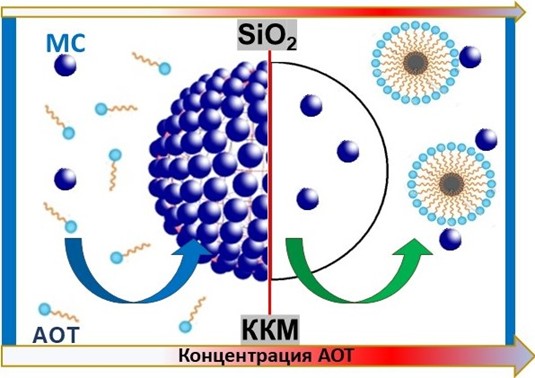
В работе исследовано влияние 1∙10−5÷2∙10−2 М бис(2-этилгексил)сульфосукцината натрия (АОТ) на сорбцию низких концентраций метиленового синего (МС) наночастицами аморфного диоксида кремния из водных сред. С ростом концентрации АОТ гидродинамический диаметр (по n-усреднению) частиц сорбента был практически неизменным (⁓100 нм); а дзета-потенциал увеличивался (по модулю) с −33 до −58 мВ. Присутствие в растворе красителя при максимальной концентрации 5∙10−3 мг/мл сдвигало критическую концентрацию мицеллообразования (ККМ) АОТ в область меньших концентраций: с 2.5∙10−3 до 1∙10−3 М. Наибольшая сорбционная емкость (2.3 мг/г) получена в домицеллярном концентрационном диапазоне АОТ; в присутствии мицелл (при концентрациях выше ККМ) сорбция МС резко падала. По-видимому, взаимодействие катионов МС с отрицательно заряженной поверхностью мицеллярных агрегатов в объеме раствора более предпочтительно, чем взаимодействие с поверхностью сорбента.
ЭВОЛЮЦИЯ ЧАСТИЦ ОПТИЧЕСКИ АКТИВНЫХ ДИСПЕРСИЙ ДНК
М. А. Колыванова, А. В. Шибаева, М. А. Климович, А. В. Белоусов, И. Н. Сенчихин, В. А. Кузьмин, В. Н. Морозов
Полный текст (PDF), 143 просмотров
Аннотация:
Проведено сопоставление кинетики формирования характерных …
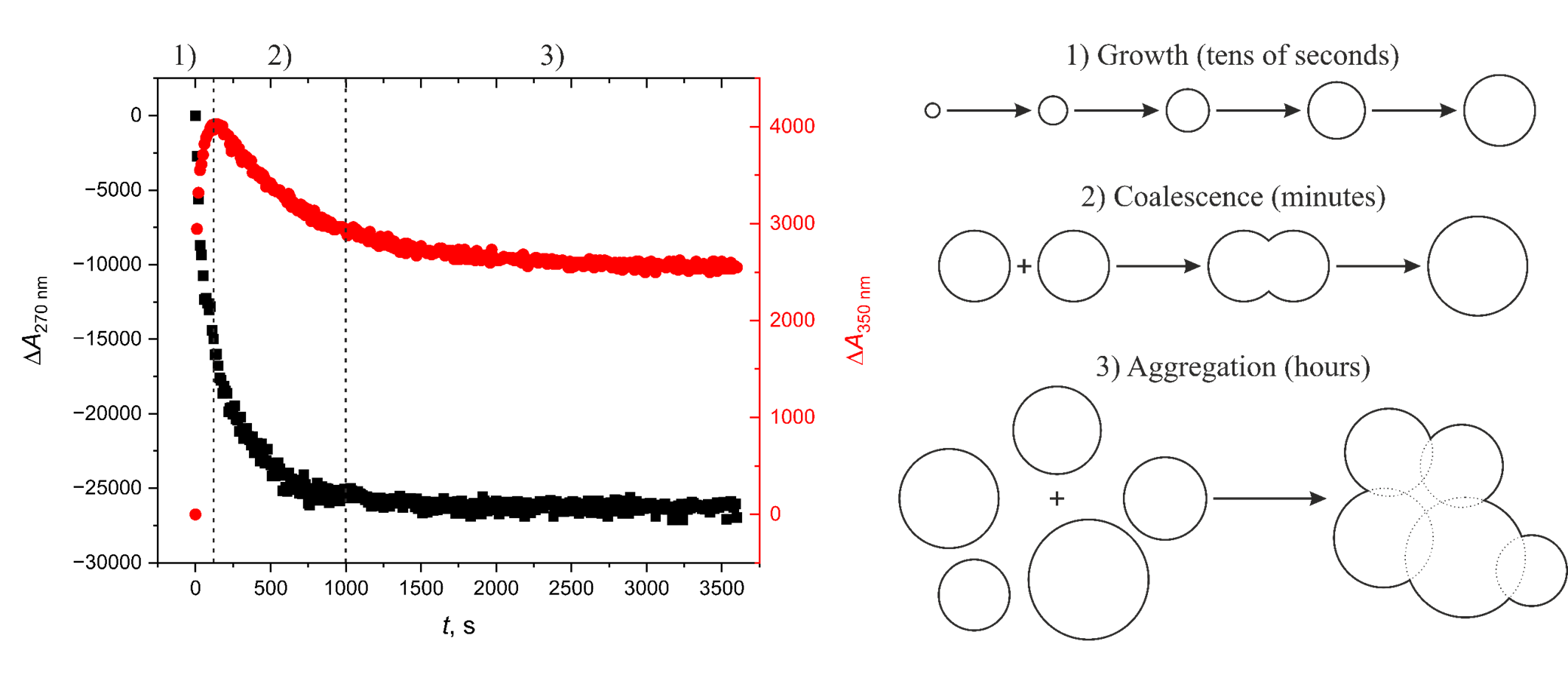
Проведено сопоставление кинетики формирования характерных сигналов кругового дихроизма холестерических жидкокристаллических дисперсий ДНК с результатами их детального исследования методом конфокальной микроскопии. Экспериментально подтверждены три процесса эволюции дисперсных частиц (в скобках указаны характерные временные интервалы): 1) рост за счет присоединения молекул ДНК (десятки секунд), 2) сопровождающаяся перестройкой холестерических слоев коалесценция (минуты) и, наконец, 3) имеющая пороговую зависимость от концентрации нуклеиновой кислоты агрегация, в результате которой в системе формируются крупные образования нерегулярной формы (часы). Сделано предположение об отсутствии у последних «интегральной» оптической активности.
ТЕПЛОВАЯ КОНВЕКЦИЯ МАРАНГОНИ В ПОЛУСФЕРИЧЕСКОЙ ИСПАРЯЮЩЕЙСЯ КАПЛЕ ЖИДКОСТИ: АНАЛИТИЧЕСКОЕ РЕШЕНИЕ
П. В. Лебедев-Степанов
Полный текст (PDF), 74 просмотров
Аннотация:
Исследованы квазистационарные гидродинамические потоки в …
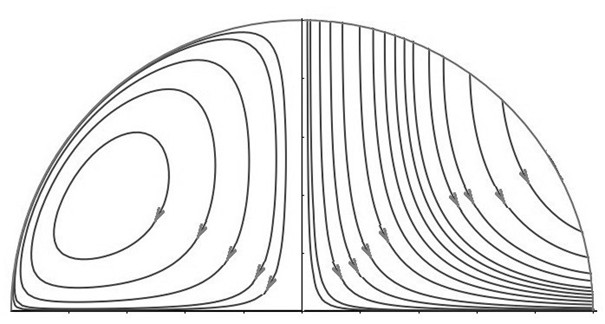
Исследованы квазистационарные гидродинамические потоки в малой медленно испаряющейся капле полусферической формы, установленной на плоскую горизонтальную подложку при наличии пиннинга контактной линии. Получены и визуализированы аналитические решения уравнений Стокса для капиллярного потока, которому отвечает так называемый «эффект кофейного кольца», а также для течения Марангони, возбуждаемого градиентом поверхностного натяжения, связанного охлаждением поверхности капли при ее испарении. Модель потоков отвечает малым числам Рейнольдса и Пекле. Проанализированы граничные условия, связанные с наличием или отсутствием скольжения жидкости возле подложки, которые способствуют или препятствуют возникновению течения Марангони. Предложена гипотеза, что критическое число Марангони отвечает параметрам системы, при которых происходит срыв потока жидкости около подложки и переход его в режим скольжения, когда скорость жидкости в непосредственной близости к подложке отлична от нуля. Полученный результат может использоваться для исследования структуры и оценки мощности течения в испаряющейся микрокапле.
НЕЭКВИВАЛЕНТНОЕ МАКРОФАЗОВОЕ РАЗДЕЛЕНИЕ И ОБРАЗОВАНИЕ ПОЛИЭЛЕКТРОЛИТНЫХ КОМПЛЕКСОВ В СИСТЕМЕ ЛИГНОСУЛЬФОНАТ–ХИТОЗАН
Т. Н. Луговицкая, У. Р. Шарипова, Д. Ю. Берсенева, М. А. Гладышева, Д. А. Рогожников
Полный текст (PDF), 96 просмотров
Аннотация:
Исследовано интерполимерное взаимодействие в системе …
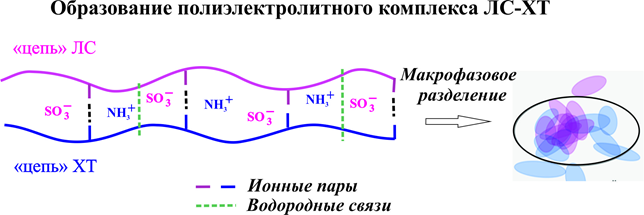
Исследовано интерполимерное взаимодействие в системе лигносульфонат (ЛС)−хитозан (ХТ), растворенный в аспарагиновой кислоте (ХТ·Asp), и установлены коллоидно-химические закономерности макрофазового разделения с образованием водонерастворимого полиэлектролитного комплекса (ПЭК). По данным концентрационных зависимостей молярной электропроводности и pH показано, что растворы ЛС и ХТ·Asp проявляют свойства полиэлектролитов. На основании потенциометрически контролируемого дозированного смешения растворов полиэлектролитов в двух последовательностях установлены точки помутнения, и построена эмпирическая диаграмма состояния систем ЛС–ХТ·Asp. Показано, что при добавлении раствора ЛС к раствору ХТ·Asp начальное помутнение наблюдается при условном аналитическом соотношении n(SO3⁻)/n(NH3+)=0.015–0.567, т. е. в области аналитического избытка аминогрупп ХТ. При обратной последовательности смешения, когда раствор ХТ·Asp добавляют к раствору ЛС, начальная мутность фиксируется при n(SO3⁻)/n(NH3⁺)=6.30–7.03, что соответствует аналитическому избытку сульфонатных групп ЛС. Следовательно, переход системы к макрофазовому разделению не сводится к достижению условной зарядовой эквивалентности функциональных групп и существенно зависит от последовательности введения компонентов, локального состава среды, концентрационных и кинетических факторов. Из систем ЛС–ХТ·Asp выделен водонерастворимый ПЭК и охарактеризован с привлечением методов ИК-спектроскопии, термогравиметрического анализа и сканирующей электронной микроскопии. Совокупность полученных данных свидетельствует о формировании межполимерного комплекса ЛС–ХТ с участием электростатических взаимодействий между SO3⁻-группами ЛС и NH3⁺-группами протонированного ХТ, а также водородных связей. Установлено, что фазовое поведение системы определяется не только зарядовым соотношением компонентов, но и последовательностью смешения, а также конформационно-ассоциативными особенностями природных полиэлектролитов в водной среде.
ЗАВИСИМОСТЬ СВОЙСТВ ПОВЕРХНОСТИ И СОРБЦИОННОЙ СПОСОБНОСТИ СИЛИКАТОВ МАГНИЯ ОТ КРИСТАЛЛИЧЕСКОЙ СТРУКТУРЫ И СПОСОБА ПОЛУЧЕНИЯ
К. А. Парих, А. А. Алексеев, О. Ю. Голубева
Полный текст (PDF), 93 просмотров
Аннотация:
В гидротермальных условиях синтезированы кристаллические …
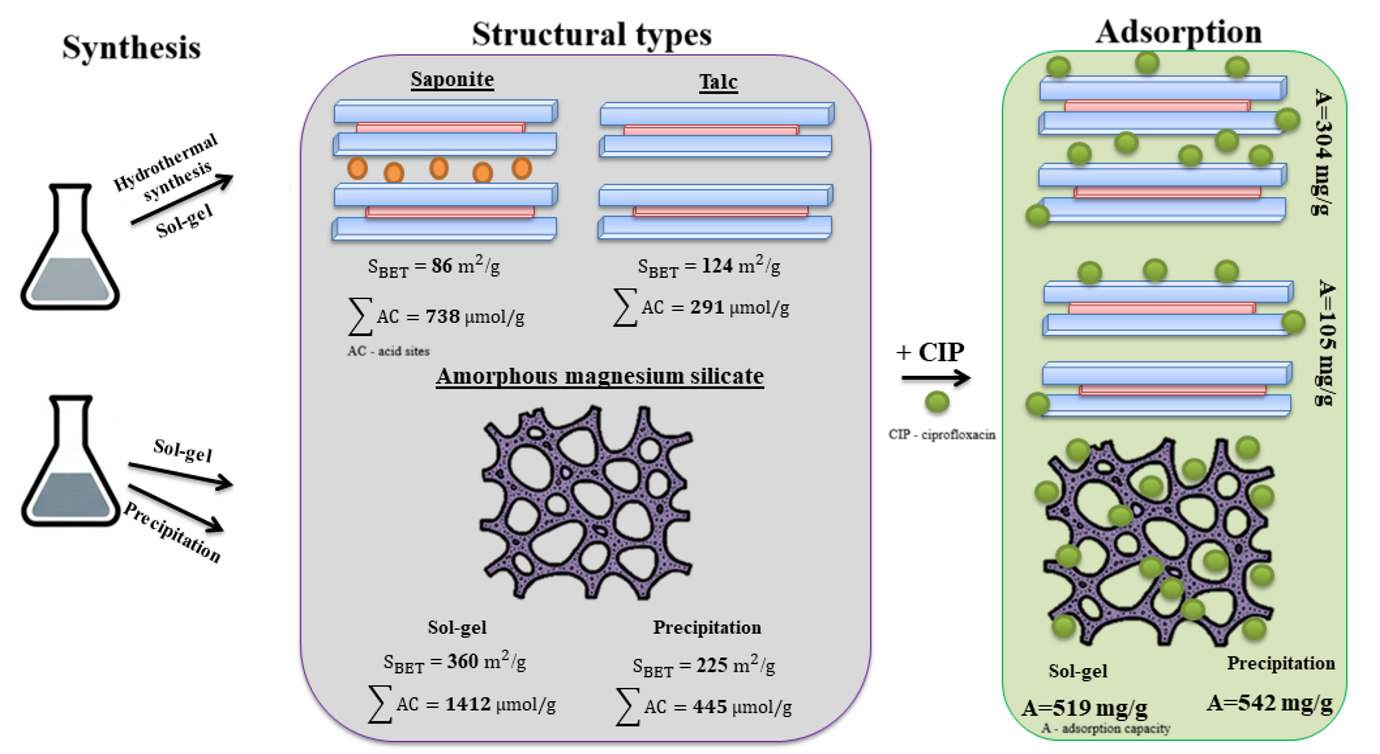
В гидротермальных условиях синтезированы кристаллические силикаты магния со структурами талька и сапонита. Аморфный силикат магния получен с использованием метода осаждения и золь−гель метода. Проведено исследование влияния кристаллической структуры силикатов магния на их сорбционную способность и свойства поверхности. Образцы исследованы методами рентгенофазового анализа, сканирующей электронной микроскопии с EDX-анализом, методом низкотемпературной адсорбции азота. Исследованы влагопоглотительная способность образцов и функциональный состав их поверхности. Изучена способность образцов извлекать антибиотический препарат ципрофлоксацин из водных сред и построены изотермы адсорбции. Для аппроксимации полученных данных использованы модели Ленгмюра, Фрейндлиха и гибридная модель Ленгмюра−Фрейндлиха. Оценен вклад различных механизмов в адсорбцию ципрофлоксацина синтезированными силикатами магния. Анализ количественного распределения кислотных и основных центров, а также сорбционной способности образцов показали, что для исследованных материалов распределение активных центров и сорбционная емкость существенно зависят от способа их получения, степени кристалличности и структурной упорядоченности поверхности. Установлено, что снижение кристалличности и переход к аморфным формам, а также особенности метода синтеза, приводящие к формированию более развитой поверхности, способствуют увеличению сорбционной способности образцов.
ОБРАТНЫЕ МИКРОЭМУЛЬСИИ ВОДА/АОТ/ИЗОПРОПИЛМИРИСТАТ КАК СРЕДЫ ДЛЯ БИОКАТАЛИТИЧЕСКИХ РЕАКЦИЙ
Н. В. Саутина, Д. О. Сагдеев, О. И. Гнездилов, Ю. Г. Галяметдинов
Полный текст (PDF), 100 просмотров
Аннотация:
В настоящей работе рассмотрена возможность …
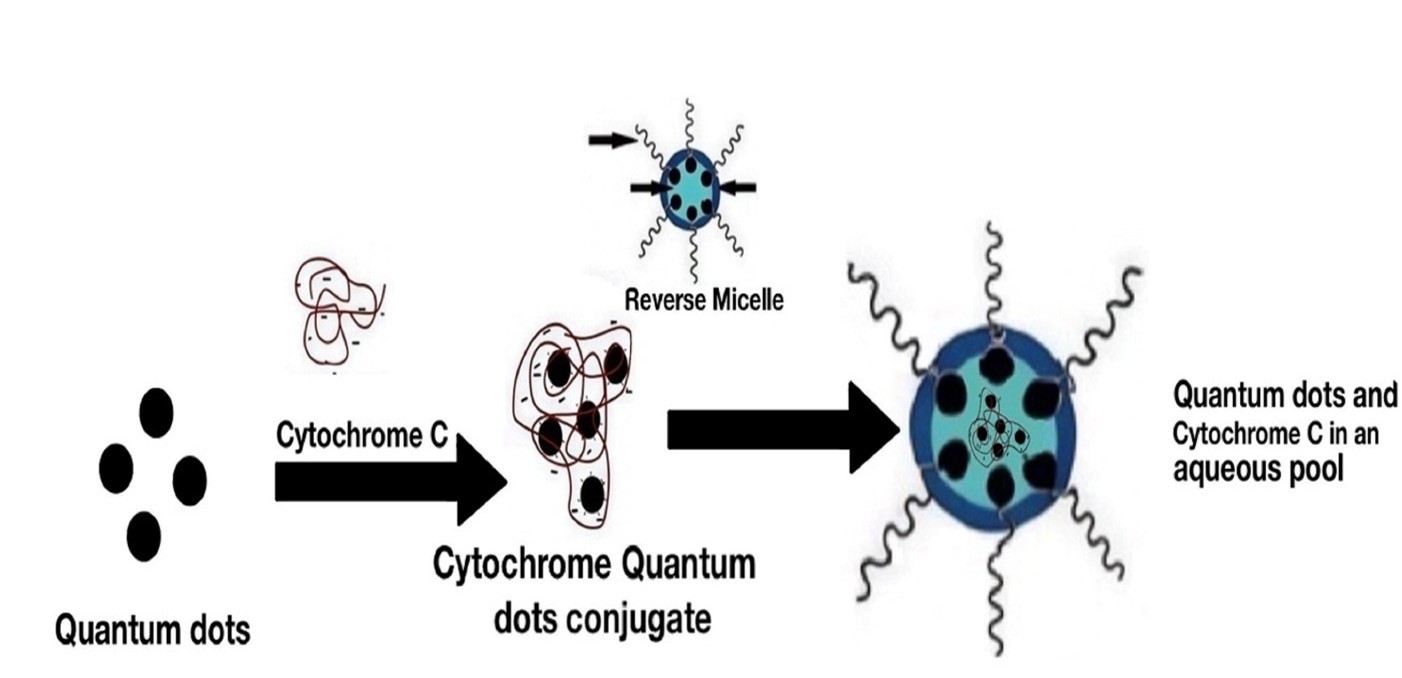
В настоящей работе рассмотрена возможность управления биокаталитическими реакциями в самоорганизующихся системах с использованием в качестве катализатора белка — цитохрома С. Известно, что он может ускорять биологические процессы, являясь катализатором клеточного дыхания. Микроэмульсии на основе бис(2-этилгексил)сульфосукцината натрия (АОТ) представляют значительный интерес как наноразмерные транспортные и реакционные системы в биокатализе, поскольку они способны стабилизировать ферменты, сохраняя их функциональную активность. В данной работе получены трехкомпонентные системы вода/АОТ/изопропилмиристат различного состава и степени гидратации, которые имеют структуру обратных микроэмульсий с размером капель от 4.2 до 8.7 нм, а также жидких кристаллов. Исследованы структурно-фазовые трансформации в изучаемых системах при увеличении концентрации АОТ от микроэмульсий до жидкокристаллической мезофазы. Установлено, что при введении цитохрома С в микроэмульсии он хорошо солюбилизируется, при этом происходит некоторое уменьшение их размера и более узкое распределение капель в системе. Результаты УФ-спектроскопии и люминесценции показали наличие адсорбционного взаимодействия между белком и полярными группами АОТ. Применимость полученных систем для биокатализа исследована на примере реакции окисления гваякола перекисью водорода в присутствии цитохрома С. Для контролируемого увеличения выхода продукта в каталитической реакции в микроэмульсии были добавлены гидрофильные квантовые точки Cd0.9Mn0.1S/ZnS, стабилизированные меркаптопропионовой кислотой. Установлено, что выход тетрагваякола, который получается в результате реакции, увеличивается прямо пропорционально концентрации введенных квантовых точек. Таким образом, применяя микроэмульсии как среды для проведения реакций, мы можем ускорять либо замедлять каталитические процессы.
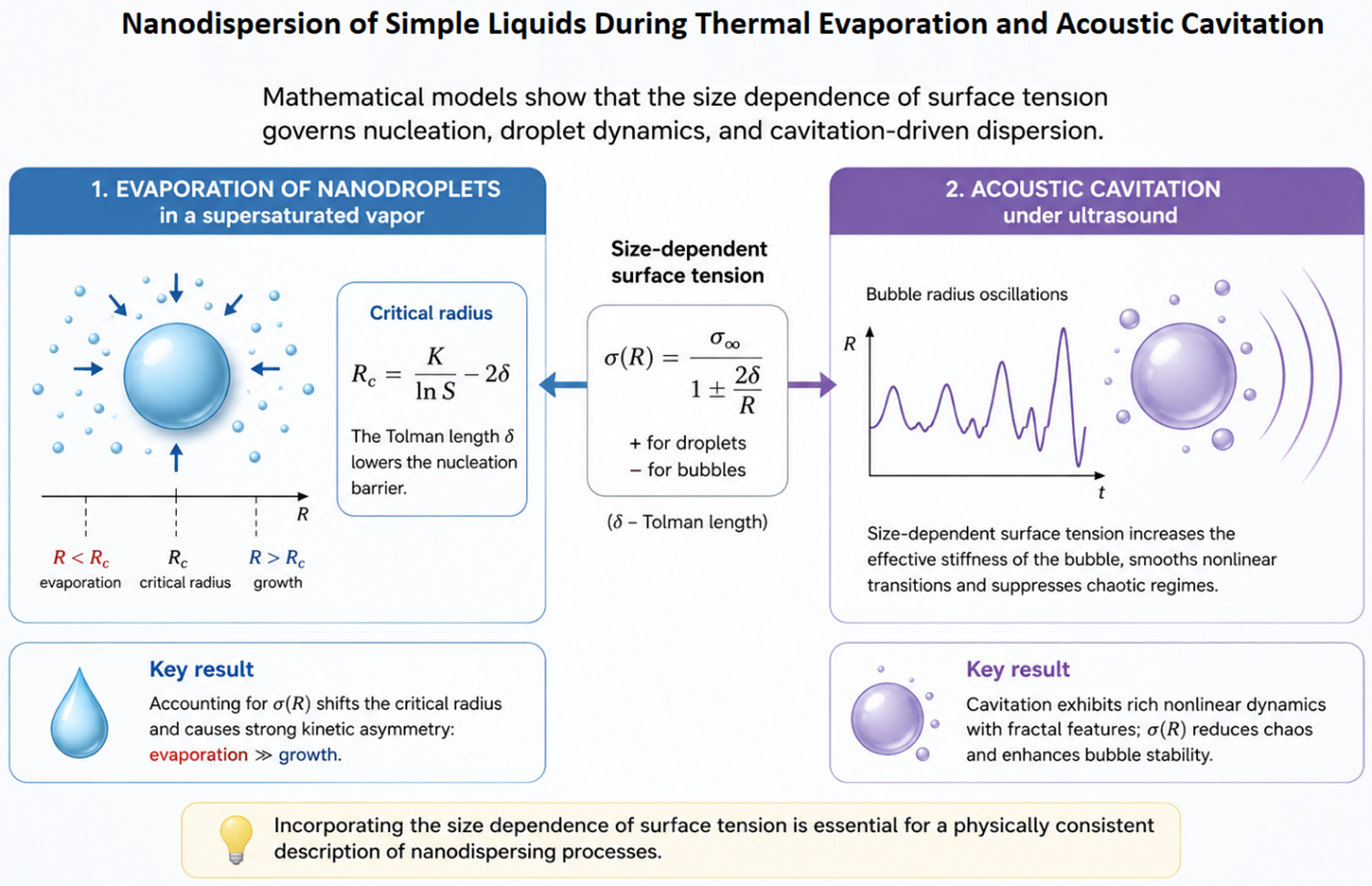
НАНОДИСПЕРГИРОВАНИЕ ПРОСТЫХ ЖИДКОСТЕЙ ПРИ ТЕПЛОВОМ ИСПАРЕНИИ И АКУСТИЧЕСКОЙ КАВИТАЦИИ
А. А. Сокуров, С. Ш. Рехвиашвили
Полный текст (PDF), 107 просмотров
Аннотация:
Построена теория нанодиспергирования простой жидкости …
Построена теория нанодиспергирования простой жидкости с учетом размерной зависимости поверхностного натяжения применительно к тепловому испарению в пересыщенной среде и ультразвуковой кавитации. Показано, что учет этой зависимости снижает энергетический барьер нуклеации, уменьшает критический радиус зародыша и вызывает значительную асимметрию кинетики роста и испарения нанокапель. С использованием модифицированного уравнения Рэлея–Плессета установлено, что размерная зависимость поверхностного натяжения увеличивает капиллярную жесткость пузырька, подавляет хаотические режимы и сохраняет масштабно-инвариантную (фрактальную) структуру кавитационных колебаний. Получен новый критерий исчезновения барьера нуклеации. Показано, что в реальных условиях ультразвуковой кавитации пересыщение достигает достаточно высоких значений, что соответствует переходу в спинодальный режим спонтанного фазового разделения и обосновывает образование нанокапель (размером 1–3 нм) без активационной задержки.
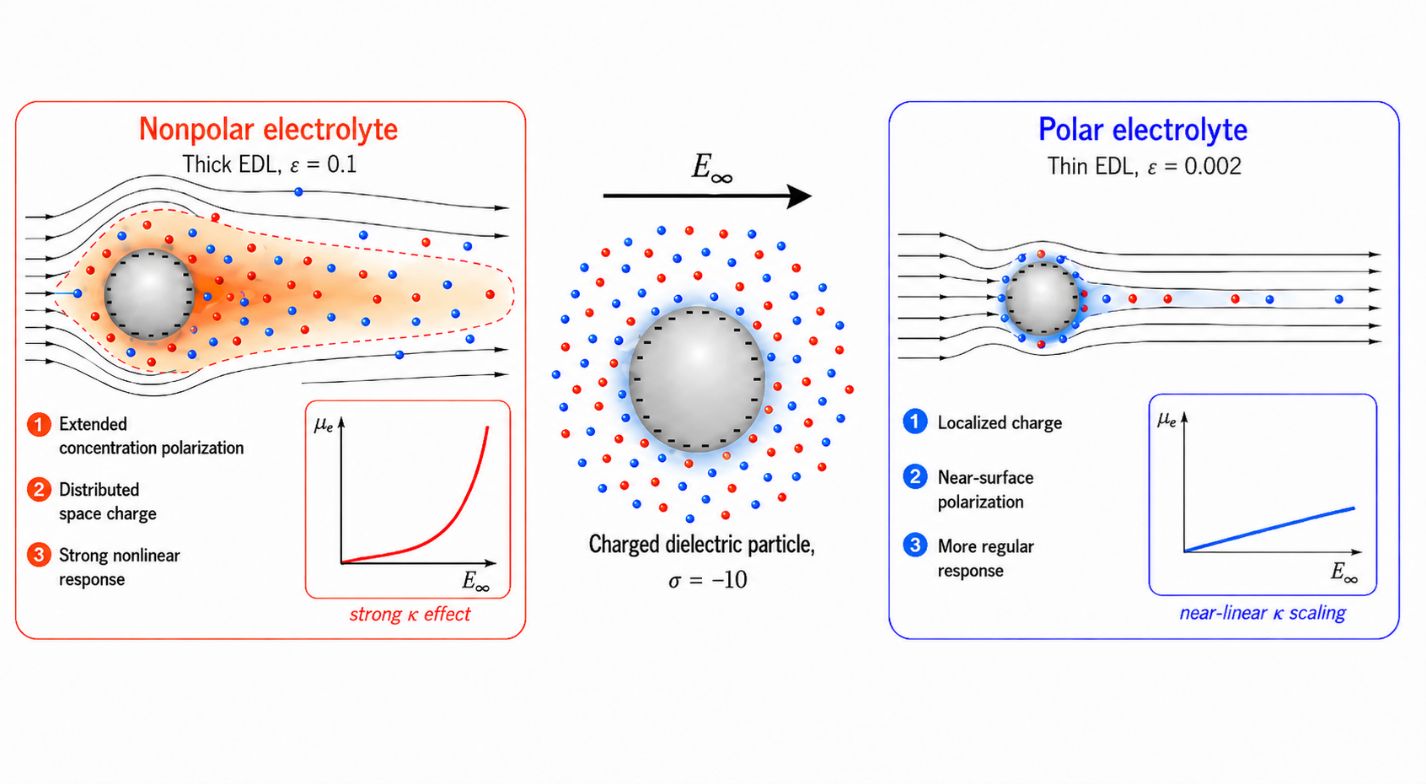
НЕЛИНЕЙНЫЙ ЭЛЕКТРОФОРЕЗ ЗАРЯЖЕННОЙ ДИЭЛЕКТРИЧЕСКОЙ ЧАСТИЦЫ В ПОЛЯРНОЙ И НЕПОЛЯРНОЙ СРЕДЕ: РОЛЬ ПАРАМЕТРА ЭЛЕКТРОГИДРОДИНАМИЧЕСКОЙ СВЯЗИ
Е. А. Франц, А. А. Крылов, Е. А. Демехин
Полный текст (PDF), 133 просмотров
Аннотация:
В работе выполнено прямое численное …
В работе выполнено прямое численное моделирование электрофореза заряженной диэлектрической микрочастицы в рамках связанной нелинейной системы уравнений Нернста−Планка−Пуассона−Стокса в диапазоне от слабого до сильного электрического поля. Целью исследования является сопоставление электрофоретической мобильности и структуры ионного переноса в полярных и неполярных электролитах при фиксированном поверхностном заряде частицы. Для описания этих типов среды рассматриваются два характерных значения длины Дебая, соответствующие тонкому и относительно толстому двойному электрическому слою. Поверхностный заряд частицы фиксируется на величине, которая соответствует режиму, при котором ожидаются выраженные неравновесные эффекты и деформация ионного облака при достаточной напряженности электрического поля. Основное внимание уделено зависимости безразмерной мобильности от напряженности поля и управляющего параметра κ, определяющего интенсивность электрокинетического взаимодействия и влияние гидродинамики на ионный перенос. Показано, что с ростом напряженности отклик становится существенно нелинейным и сопровождается усилением концентрационной поляризации и перестройкой пространственных распределений концентраций и объемного заряда. Проведено сравнение параметрических зависимостей электрофоретической мобильности для двух характерных значений длины Дебая и выделены области параметров, где различие между полярной и неполярной средой проявляется главным образом количественно, а также области, соответствующие качественной перестройке режима переноса. Для характерных режимов приведены пространственные распределения суммарной концентрации ионов и плотности заряда, позволяющие связать изменения мобильности с изменением структуры ионных потоков и объемной электрической силы. Полученные результаты задают критерии наступления неравновесного режима и могут быть использованы для интерпретации экспериментов и проектирования электрокинетических микросистем в полярных и неполярных электролитах.
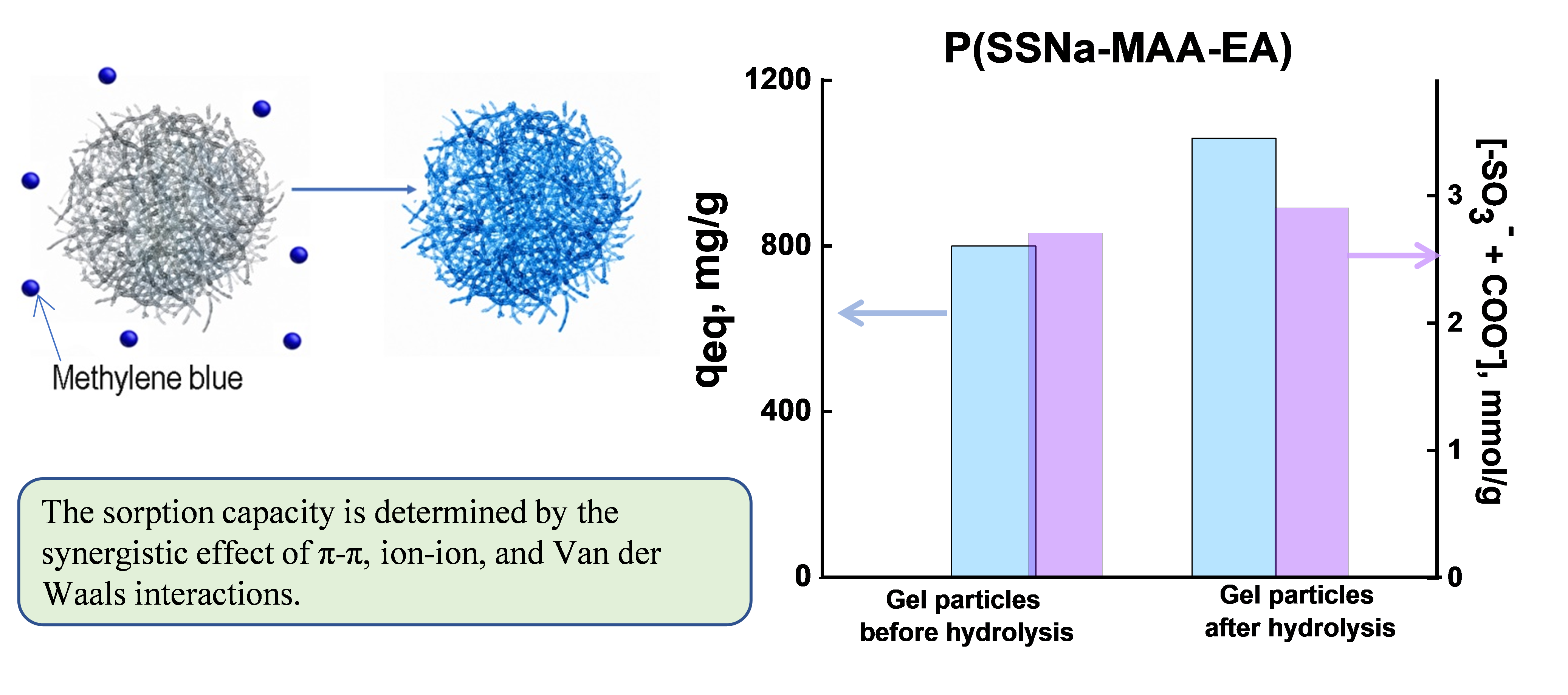
ВЛИЯНИЕ ПРИРОДЫ ФУНКЦИОНАЛЬНЫХ СОМОНОМЕРОВ НА ЭЛЕКТРОПОВЕРХНОСТНЫЕ И СОРБЦИОННЫЕ СВОЙСТВА МИКРОСФЕР С СУЛЬФОНАТНЫМИ ГРУППАМИ
Н. Н. Шевченко, Е. М. Иванькова, Ю. О. Скуркис, О. Д. Якобсон
Полный текст (PDF), 198 просмотров
Аннотация:
Синтезированы сшитые полиэлектролитные частицы диаметром …
Синтезированы сшитые полиэлектролитные частицы диаметром от 200 нм до 20 мкм на основе сополимеров пара-стиролсульфоната натрия (ССН) с различными акрилатными сомономерами (метакриловая кислота (МАК), бутилакрилат (БА), этилакрилат (ЭА)). Синтезированные частицы являются гидрогелями (степень набухания в воде составляет от 200 до 300%) и характеризуются бимодальным распределением по размерам. Введение БА в состав сомономерной смеси приводит к формированию полиэлектролитных частиц с минимальными диаметром (1÷5 мкм и 200÷700 нм) и концентрацией сульфонатных групп (1.3 ммоль/г). Максимальным содержанием ионогенных групп (2.9 ммоль/г) характеризуются гелевые частицы П(ССН-МАК). Морфология и диаметр гелевых частиц изучены методами оптической и растровой электронной микроскопии, состав исследован методом ИК-спектроскопии, концентрация сульфонатных и карбоксильных групп определена методами кондуктометрического и потенциометрического титрования. Показано, что сорбционная емкость по отношению к органическому загрязнителю (метиленовому синему) зависит не только от концентрации функциональных групп и определяется синергетическим эффектом трех взаимодействий (π−π, ион-ионных и Ван-дер-Ваальсовых взаимодействий).
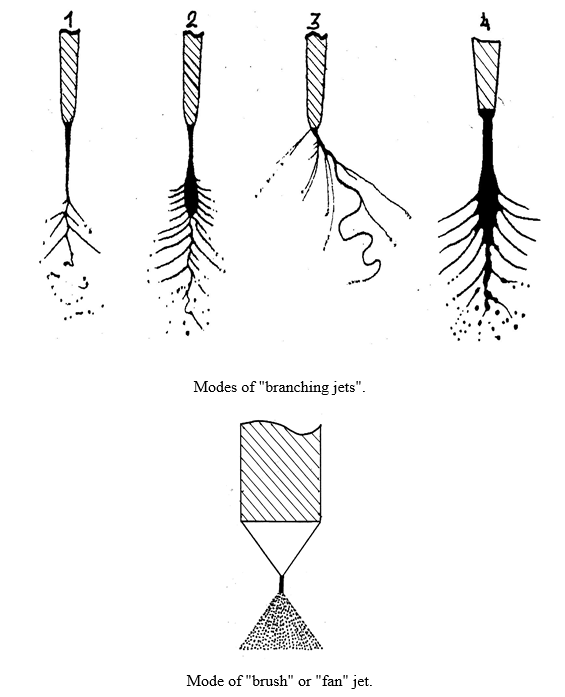
ОБ ЭЛЕКТРОДИСПЕРГИРОВАНИИ ЖИДКОСТИ С МЕНИСКА НА ТОРЦЕ КАПИЛЛЯРА: ОТРЫВ КАПЛИ–РАСПАД ВЫБРАСЫВАЕМОЙ СТРУИ
С. О. Ширяева, А. И. Григорьев
Полный текст (PDF), 89 просмотров
Аннотация:
Определено место в общей феноменологической …
Определено место в общей феноменологической классификации режимов электрогидродиспергирования малоисследованного режима «ветвящихся струй». Выяснилось, что режим «ветвящихся струй» реализуется только для весьма больших безразмерных вязкостей жидкости (в области перехода от безразмерной очень вязкой жидкости к безразмерной вязкоупругой жидкости), высоких электропроводностей жидкости, с нарушением осесимметричности струи на финальной стадии явления. Напряженность электростатического поля в окрестности дочерних струй при реализации режима «ветвящихся струй» находится на пороге зажигания в окружающей газовой среде коронного разряда. Показано, что режим «ветвящихся струй» и «веерный» режимы диспергирования различаются прикладываемым к разрядному промежутку напряжением и вязкостью диспергируемой жидкости.
Surface Chemistry of TiO2 and Co3O4 in Polypyrrole Nanocomposites: Influence on Congo Red Affinity and Adsorption Capacity
N. Baa, N. Belhouchat, M. Djama, I. K. Benramdane, I. Fadel, L. Bessah, A. Mudhoo, A. Sahli, Y. Larbah, L. Benhaddad
228 просмотров
Аннотация:
PPy and PPy-based composites were …
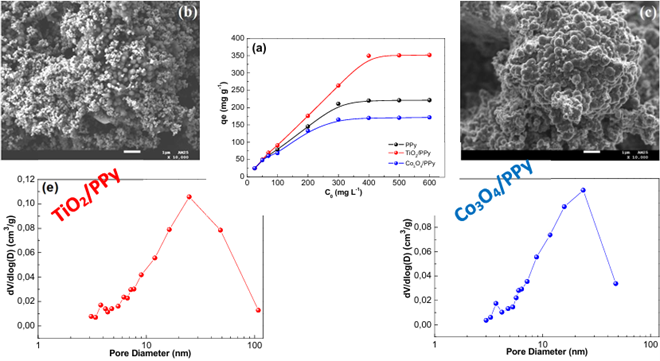
PPy and PPy-based composites were prepared. The composites were synthesized by adding TiO2 and Co3O4 metal oxides to PPy matrix. These three materials were tested for their ability to adsorb Congo Red (CR) dye. Their structure, morphology, and textural properties were analysed using XRD, FTIR, SEM–EDX and BET-BJH. The surface charge was measured using the point of zero charge (pHpzc). The results showed that the metal oxides were successfully incorporated to the polymer, which changed the surface morphology, pore structure, and surface charge characteristics. The effects of contact time, initial dye concentration, pH and temperature on adsorption were studied. PPy has the largest BET surface area (195.47 m2/g) as compared to TiO2/PPy (19.73 m2/g) and Co3O4/PPy (22.75 m2/g). TiO2/PPy sustained the highest CR adsorption capacity (351.75 mg/g), and this is due to synergistic effects nascent from the combined PPy functional groups and TiO2 surface chemistry. Co3O4/PPy exhibited the highest affinity for CR, attributable to the specific interaction between the Co2⁺/Co3⁺ sites and the anionic dye molecules. Kinetic results showed that the Shrinking Core Model (SCM) captured the experimental data best compared to pseudo-first order and pseudo-second kinetic models. The superior fit of the SCM suggests that a mixed mechanism controls diffusion through external film and intraparticle diffusion. Adsorption isotherm curve-fitting results showed that the Langmuir-Freundlich model provided the best fit for equilibrium data for CR adsorption, indicating both surface heterogeneity and non-uniform distribution of adsorption energies. Thermodynamic parameters revealed that the adsorption of CR is spontaneous and thermodynamically favourable.
Transport of Immiscible Non-Newtonian Fluid Layers in Composite Anisotropic Porous Structures under MHD Influence
Nitish Gupta, Kuppalapalle Vajravelub, Abhay Gupta
160 просмотров
Аннотация:
Multilayer transport of non-Newtonian fluids …
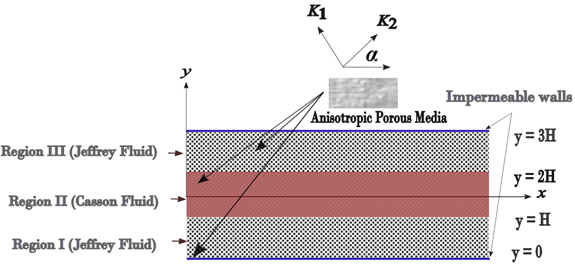
Multilayer transport of non-Newtonian fluids through anisotropic porous media under magnetic fields is central to many engineering and biomedical applications, yet the combined influence of permeability anisotropy and magnetic control on layered flows remains insufficiently understood. The steady, incompressible, and laminar flow of a Casson–Jeffrey fluid system between two parallel plates filled with an anisotropic porous medium is analyzed in the presence of a uniform inclined magnetic field. The immiscible multilayer configuration consists of a Casson fluid core sandwiched between two Jeffrey fluid layers (J–C–J), enabling detailed examination of interfacial and anisotropic effects. A rigorous magnetohydrodynamic model incorporating directional permeability is developed, and the governing equations are nondimensionalized to introduce the anisotropic permeability ratio, anisotropy angle, Hartmann number, and Casson and Jeffrey fluid parameters. Exact analytical solutions for the velocity field are obtained. The results reveal that increasing permeability anisotropy and magnetic field strength suppress fluid velocity and interfacial shear, while the applied magnetic field provides an effective mechanism to regulate and stabilize multilayer flow in anisotropic porous channels. These findings offer physical insight into flow control in anisotropic porous systems, with applications in enhanced oil recovery, biomedical transport, composite material processing, and magnetically tunable microfluidic devices.
Ion Size-Dependent Flow Modulation and Selectivity in Polyelectrolyte Grafted Nanochannels under Combined Electroosmotic and Pressure-Driven Transport
Amit Malick, Bhanuman Barman
107 просмотров
Аннотация:
We propose a detailed …
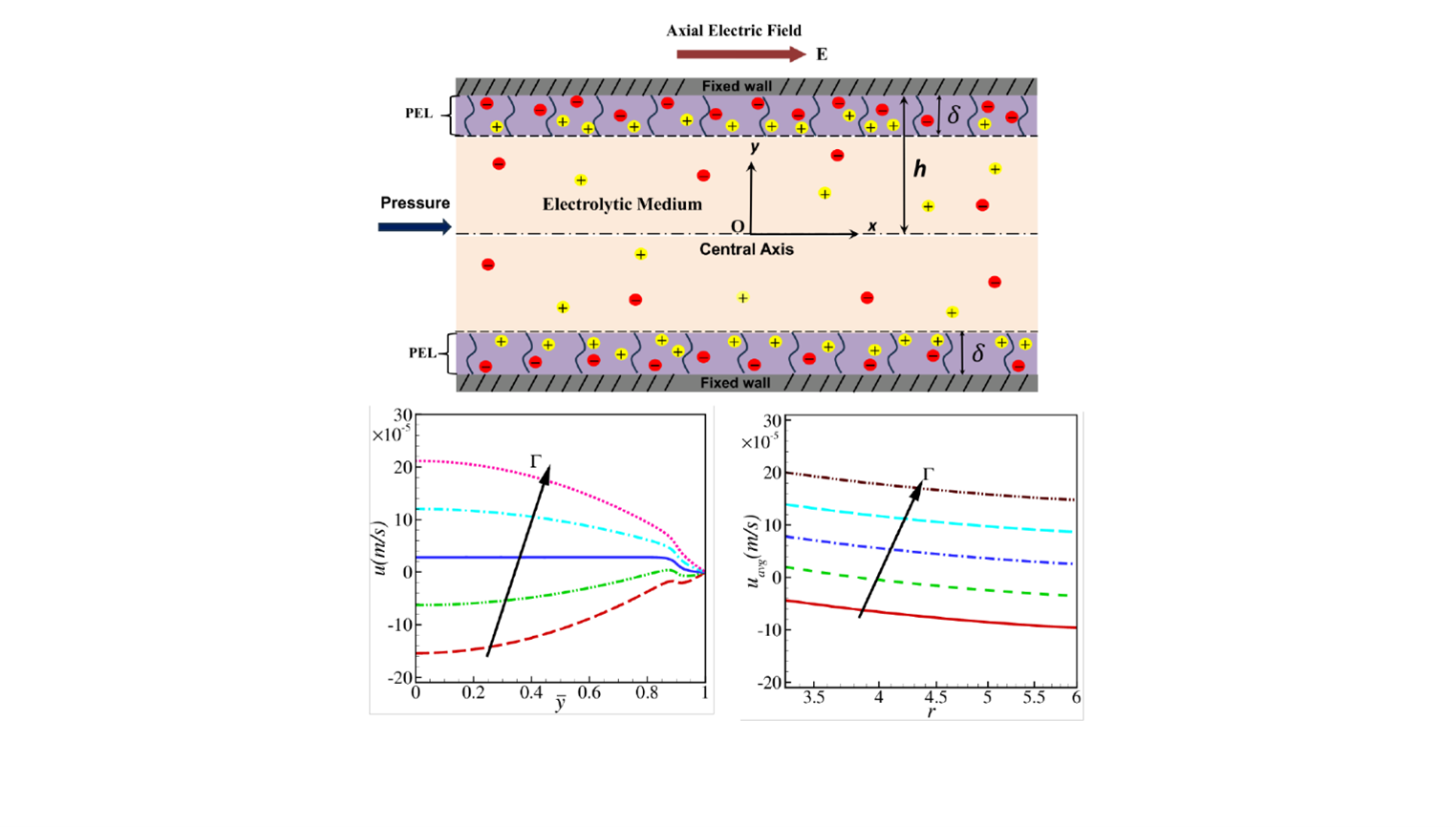
We propose a detailed study of the electroosmotic and pressure-driven flow of power-law fluids through soft nanochannels grafted with polyelectrolyte layers (PELs). The model incorporates the effects of finite ion size using the Carnahan−Starling-based ionic activity coefficient, ion separation caused by the Born energy difference at the PEL-electrolyte interface, and the dielectric permittivity contrast between the two media, all of which are incorporated in a modified Poisson−Boltzmann framework. A power-law model represents the fluid's non-Newtonian rheology, allowing for the consistent treatment of both shear-thinning and shear-thickening behaviours under typical nanochannel configurations. The fluid flow in and outside of the polymer brush layer is described using modified Darcy−Brinkmann and Cauchy momentum equations, accounting for both no-slip and interfacial slip conditions. Numerical solutions using finite difference approaches go beyond the limited Debye−Hückel linearization, allowing reliable predictions even at high surface charge densities. The results reveal that increasing ion size and flow behaviour index reduces average flow velocity, whereas high pressure gradients and fixed charge density increase it. Ion selectivity in shear-thinning fluids decreases with increasing pressure gradient due to hydrodynamic dominance over electrostatic interactions, while viscous drag maintains high selectivity. These findings offer new insight on coupled electrohydrodynamic transport in soft nanochannels and provided an improved foundation for designing next-generation nanofluidic devices for ion separation, purification, and biosensing applications.
Tannic-Acid-Functionalized TiO2 Nanoparticles for Adsorption of Rhodamine B and Crystal Violet from Aqueous Solutions
H. Yoo, P. D. Vu
222 просмотров
Аннотация:
Titanium dioxide nanoparticles (TiO2 NPs) …
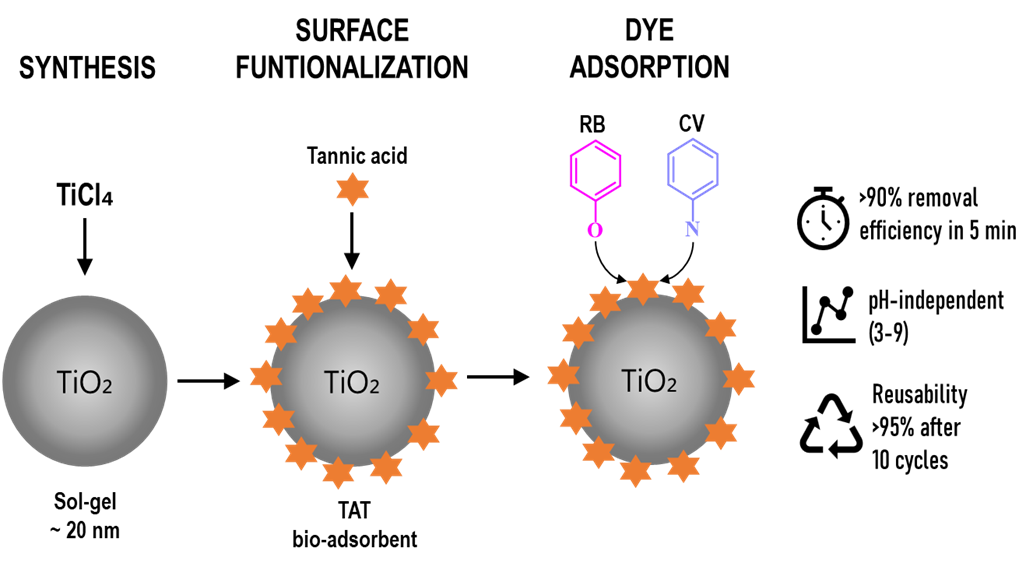
Titanium dioxide nanoparticles (TiO2 NPs) were synthesized via a controlled sol–gel method and subsequently functionalized with tannic acid (TA). The interaction of TA with TiO2 nanoparticles was evidenced by a visible color change and FT-IR analysis, consistent with surface complexation between phenolic groups and Ti4+ sites. The adsorption of cationic dyes, rhodamine B (RB) and crystal violet (CV), onto TA-functionalized TiO2 (TAT) was systematically investigated at room temperature by varying pH, initial dye concentration, contact time, and TAT dosage. Rapid dye uptake (>90% within 5 min) was observed for both dyes. Kinetic data were better described by the pseudo-second-order model than the pseudo-first-order model, reflecting adsorption controlled by surface site availability rather than a single diffusion step. Dye adsorption was largely pH-independent over the range of 3–9. Equilibrium data fitted the Langmuir model, suggesting monolayer adsorption with maximum capacities of 34.5 and 31.8 mg/g for RB and CV, respectively. TAT exhibited excellent reusability, retaining over 95% of its adsorption capacity after ten adsorption–desorption cycles using ethanol and inorganic acid. Overall, these results demonstrate that TAT is a stable, efficient, and regenerable bio-adsorbent for rapid removal of cationic dyes from water.
Adsorption of Phenolic Compounds onto Reusable CeO2@SiO2 Nanocomposites: Kinetics, Equilibrium, and Thermodynamics in Batch and Column Systems
H. Zeidan, E. Erunal, M. E. Marti
95 просмотров
Аннотация:
The recovery of phenol from …
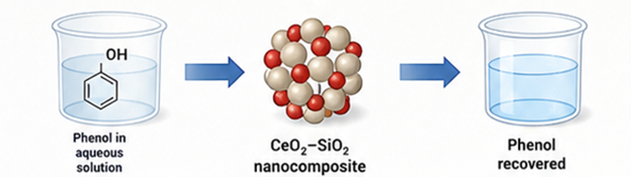
The recovery of phenol from aqueous solutions using CeO2−SiO2 nanocomposites was investigated. The optimal pH value for the process was determined to be 3. Higher phenol concentration decreased separation efficiency while enhancing increasing adsorption capacity. Conversely, increasing the adsorbent dosage led to a higher separation efficiency but lower adsorption capacity. The highest adsorption capacity (136 mg/g) and maximum efficiency were achieved with CeSi-3 (CeO2:SiO2=1:0.5), which possesses the highest cerium oxide content. Higher temperatures reduced both adsorption efficiency and capacity. Thermodynamic parameters indicate that the process is non-spontaneous and exothermic. The isotherm, thermodynamic, and kinetic analyses demonstrated that the adsorption process was governed by a combination of physical and chemical interactions. Complete desorption (100%) was achieved using 0.5 M NaOH, and following ten reuse cycles of CeSi-3, the removal efficiency decreased from 72 to 50%. Column studies revealed that adsorption capacity was influenced by flow rate and bed height. The maximum adsorption capacity (qe=63.3 mg/g) was achieved at a flow rate of 3 mL/min and a bed height of 80 mm. In this research, CeO2−SiO2 nanocomposites exhibit significant potential for sustainable recovery of phenolic compounds, according to their superior performance, reusability, and efficient desorption capabilities.The recovery of phenol from aqueous solutions using CeO2−SiO2 nanocomposites was investigated. The optimal pH value for the process was determined to be 3. Higher phenol concentration decreased separation efficiency while enhancing increasing adsorption capacity. Conversely, increasing the adsorbent dosage led to a higher separation efficiency but lower adsorption capacity. The highest adsorption capacity (136 mg/g) and maximum efficiency were achieved with CeSi-3 (CeO2:SiO2=1:0.5), which possesses the highest cerium oxide content. Higher temperatures reduced both adsorption efficiency and capacity. Thermodynamic parameters indicate that the process is non-spontaneous and exothermic. The isotherm, thermodynamic, and kinetic analyses demonstrated that the adsorption process was governed by a combination of physical and chemical interactions. Complete desorption (100%) was achieved using 0.5 M NaOH, and following ten reuse cycles of CeSi-3, the removal efficiency decreased from 72 to 50%. Column studies revealed that adsorption capacity was influenced by flow rate and bed height. The maximum adsorption capacity (qe=63.3 mg/g) was achieved at a flow rate of 3 mL/min and a bed height of 80 mm. In this research, CeO2−SiO2 nanocomposites exhibit significant potential for sustainable recovery of phenolic compounds, according to their superior performance, reusability, and efficient desorption capabilities.